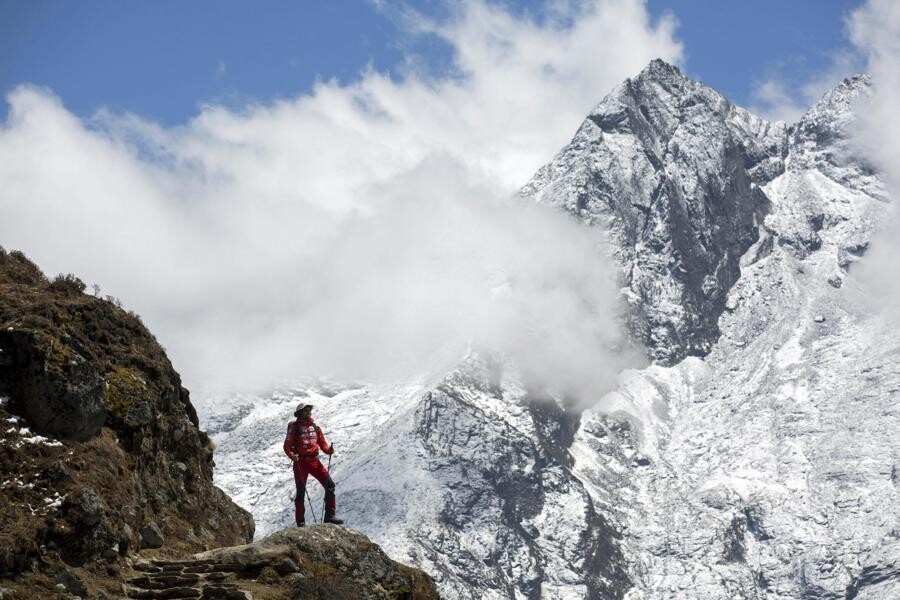
Nepal is preparing to introduce new regulations for climbers of Mount Everest, the highest mountain in the world, through a new tourism bill registered in Parliament on April 18.
According to the new bill presented, climbers must have previously summited a mountain over 7,000 meters before they can obtain a permit to climb Everest, known as the 'roof of the world.' This measure follows a directive issued by Nepal's Supreme Court last year, which urged the government to more strictly regulate ascents to Everest due to concerns over overcrowding and environmental impact.
In 2023, Nepal issued a record 479 climbing permits, resulting in 17 deaths, highlighting the dangers of congestion at extreme altitudes. Veteran climber Mingma Sherpa considered this government decision to be sound.
The bill proposes strict requirements, such as mandatory medical certification and insurance. Climbers will need to present a recent health certificate and insurance for the recovery of bodies in high-altitude areas. It also aims to address the problem of garbage accumulation on the mountain with a non-refundable environmental fee.
Additionally, it is proposed that only Nepali guides and workers can operate in high-altitude regions. The new regulation also bans solo climbing and requires the hiring of guides in proportion to climbers. More severe penalties are expected for those who violate the rules.
The spring 2025 season on Everest has already begun, with 402 permits issued to date. The number of permits granted is expected to exceed 500, with a significant increase in permit fees starting September 1.
Overall, these measures are expected to control the crowd on the mountain and reduce accidents, promoting safer and more sustainable climbing on Everest.