


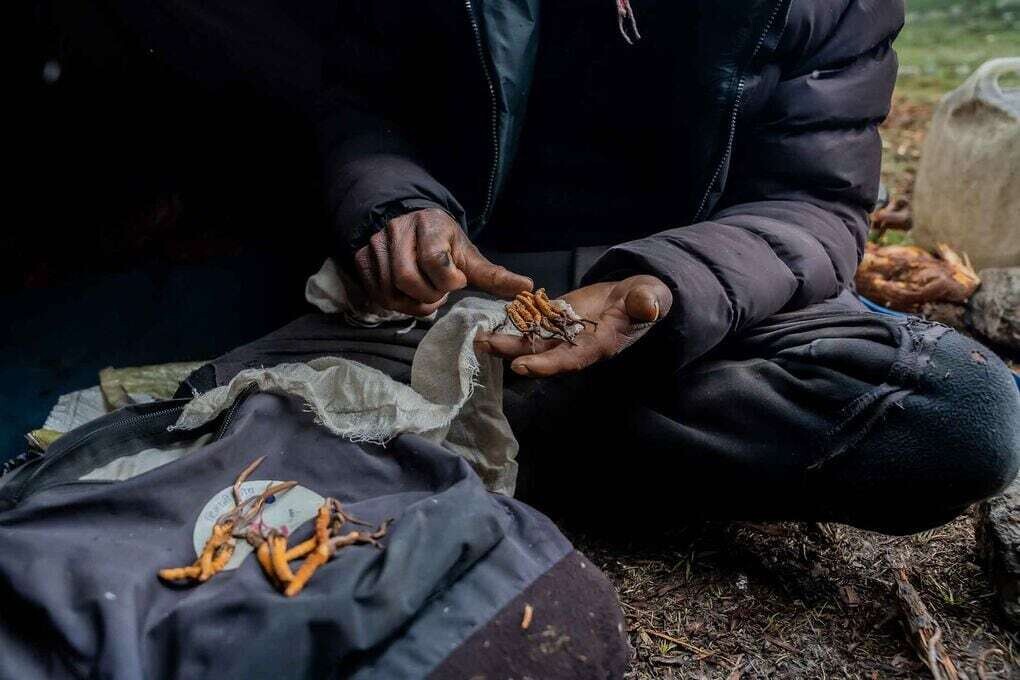
In search of yartsa gunbu, a valuable and rare mushroom that grows in the Himalayas, seekers venture into extreme altitudes and face deadly dangers. Once collected, the mushroom is taken to large cities like Beijing or Kathmandu, where it is sold to merchants who classify it by size and quality before packaging it for sale.
Yi Shaoliang, a Chinese biodiversity specialist, pointed out that while some claims about the mushroom's benefits may be exaggerated, there must be some truth to them for people to seek it. Its use is highlighted more as cultural than medical, associating it with witchcraft in some cultures. Some people consider it beneficial for harmonizing cosmic elements or as a sexual stimulant.
Yartsa gunbu has been observed to provide more energy and, according to testimonies, improve libido. The prices of the mushroom vary significantly, being much more affordable near its collection sources. Regulating its sale is a challenge, especially with large-scale smuggling between China and Nepal.
The collection of Cordyceps sinensis has become dangerous, with more deaths related to collection than to climbing Mount Everest last year. Despite its ancient use in traditional medicine, its commercial boom began in 1993 after being attributed to improvements in sports performance in China.
In academic settings, there are advocates for its medicinal benefits. The ecological and social challenges in the Himalayan region are evident, with environmental risks and debates about the sustainability of mushroom collection. Meanwhile, its economic appeal continues to drive its pursuit and trade, although only time will tell what its true value is.